Capability

Custom fabric printing, dye sublimation to 16 ft × 140 ft seamless

Dye sublimation puts the image inside the fibre rather than on top of it. Under heat and pressure, disperse dyes turn to gas, penetrate the polyester and re-solidify as part of the material. The print will not crack, peel or rub off, the fabric keeps its drape, and the graphic folds into a box instead of shipping on a tube.

  • One continuous piece up to 16 ft wide × 140 ft long — no stitch line either way
  • Direct-to-fabric and transfer paper workflows
  • Water-based disperse dyes on PVC-free polyester
  • FR-treated display, blockout, backlit and stretch fabrics
  • In-house SEG, pillowcase, pole pocket and grommet finishing
  • Graphics fold flat for courier shipping

The process, direct-to-fabric and transfer

Conventional dye sublimation is a two-step operation — print onto transfer paper, then marry paper and fabric through a heated calender that drives the dye into the polyester. IAC prints both to transfer paper and direct-to-fabric. Direct printing skips the paper entirely, which cuts consumable waste and runs considerably faster, while the calender pass still sets the dye. Transfer remains the better route for certain stocks and finer detail. We choose per job based on the fabric, the artwork and the schedule, and we colour-manage both paths to the same targets so a reprint matches.
Sixteen feet wide, a hundred and forty feet long, no seam

Standard dye sublimation machines top out around 3.2 m, which forces a seam through the middle of most stage backdrops, tradeshow backwalls and full-height retail graphics. Ours runs to five metres. At sixteen feet those run as one piece — no stitch line, no colour step across the join, no panel alignment on site. The line is roughly three times faster than the machines it replaced, so oversized work no longer carries the lead time penalty it used to. Width is only half of it. The line runs to a hundred and forty feet in length as a single continuous piece, so an arena run, a full concourse or a stadium-level wrap comes off as one graphic rather than a set of panels to align on site.

Printed in Toronto, shipped across Canada

Everything is produced at our own facility on McNicoll Avenue in North York. For Canadian buyers that removes the two things that go wrong with cross-border printing: customs clearance sitting between you and an install date, and duty arriving as a surprise on an invoice you have already approved. Work ships nationwide, and because dye sublimated graphics fold flat rather than shipping on a tube, freight to Vancouver or Halifax costs a fraction of what rigid or rolled media costs. Custom cloth printing, textile printing and fabric printing all describe the same process here. The one distinction worth making is the material: this is polyester-based display fabric, engineered for colour and dimensional stability, not natural cloth like cotton or linen. Dye sublimation chemically bonds to polyester and will not bond to natural fibres, which is why display work is polyester almost without exception.

Fabrics and finishing

We stock a range of polyester knits and wovens for different jobs — display stocks for tensioned SEG panels, heavier blockout with an opaque core for double-sided work, backlit fabrics with controlled base opacity for lightboxes, and stretch stocks for tubular and sculptural builds. Materials carry a flame-retardant treatment, which is what venues ask for. Finishing happens in house — SEG silicone edge, pillowcase sleeves for tube frames, pole pockets, hems and grommets, velcro edging and sewn panels. Water-based inks and PVC-free polyester keep the output recyclable.

Examples

Related work

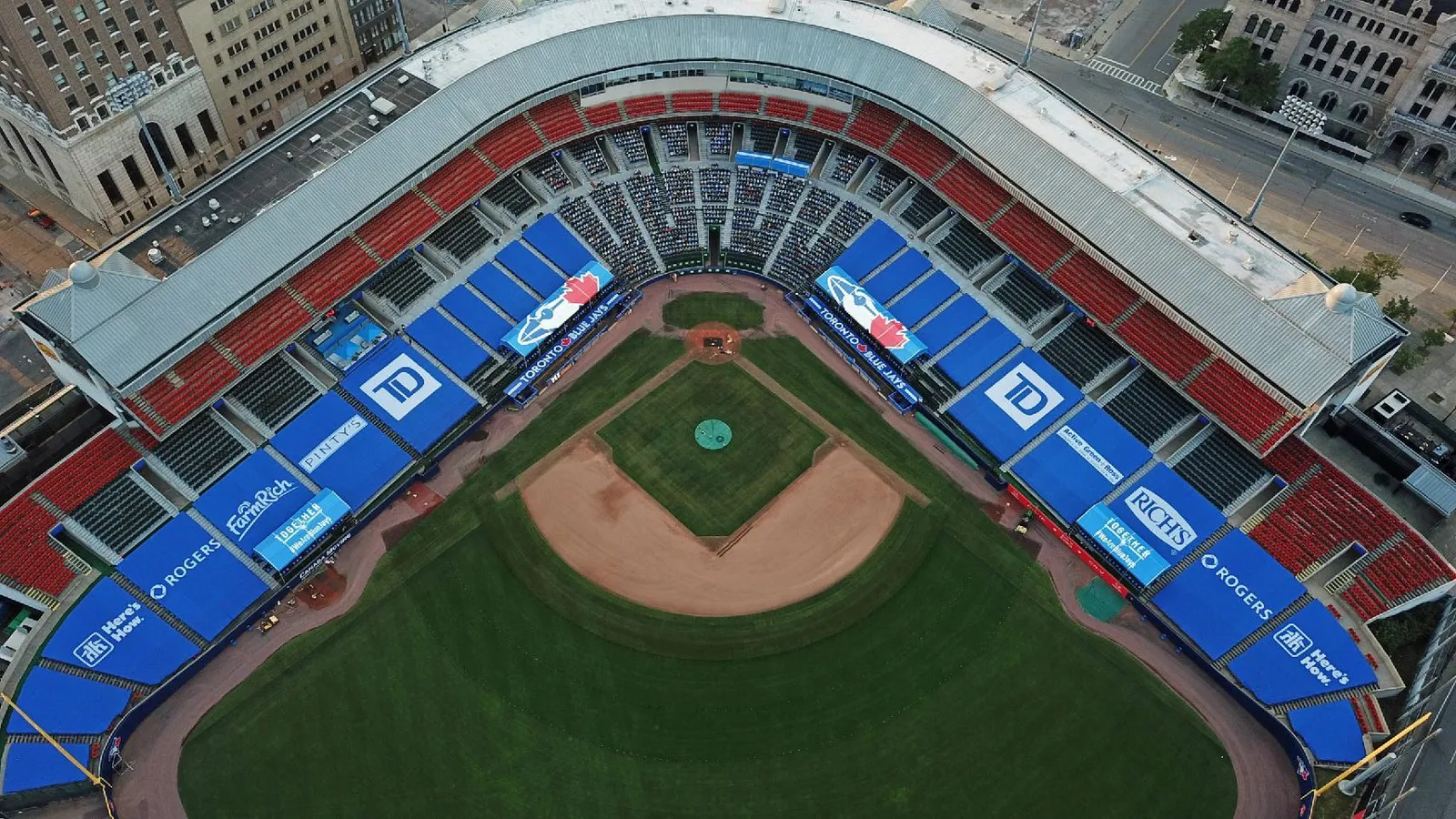
  • Stadium Branding. Stretch Fabric produced by IAC for Rogers / Toronto Blue Jays
    Rogers / Toronto Blue Jays Stadium Branding. Stretch Fabric Dye Sublimation Printing w/ Procura Hardware & Media Solutions

FAQ

Custom fabric printing, dye sublimation to 16 ft × 140 ft seamless — questions

What is dye sublimation fabric printing?

It is a heat-transfer process for polyester textiles. Disperse dyes are printed either onto transfer paper or straight onto the fabric, then passed through a heated calender at high temperature. The heat opens the polyester fibres and converts the dye to gas, which bonds inside the fibre and solidifies as it cools. Because the colour becomes part of the material rather than a surface coating, it will not crack, flake or rub off with handling.

Will printed fabric crease when it is folded?

Some stocks will show fold lines out of the box, but most relax out. Once a graphic is tensioned in an SEG frame or a tube structure, the pull across the panel removes normal shipping creases within a short time. Heavier or stiffer materials hold creases longer. If a project is especially crease-sensitive we will either recommend a more forgiving stock or roll-ship it instead of folding.

Can printed fabric be washed?

Yes, carefully. Because the dye sits inside the fibre, washing will not lift the image. Use cold water on a delicate cycle and skip the dryer — excessive heat can affect flame-retardant treatments and the material's dimensional stability, and a shrunken SEG panel will no longer fit its frame. Check with us before washing a specific stock, since recommendations vary by fabric.

Can you print on fabric I supply?

Generally no. Our presses and calender profiles are calibrated to the specific polyester stocks we hold, and colour, dye uptake and dimensional behaviour all shift with an unknown material. Running client-supplied fabric means no colour guarantee and real risk of scorching or shrinkage. If you need something outside our range, tell us the properties you are after and we will source a comparable stock we can stand behind.

Do you ship outside Toronto?

Yes, across Canada. Printing happens at our North York facility and finished graphics fold flat for courier shipping, so freight costs a fraction of what rolled or rigid media costs. Nothing crosses a border, so there is no customs clearance between you and an install date.

Next step

Request a printed fabric swatch and see how your colours hold on the actual stock.

Send drawings, a store list or a rough idea. We will come back with substrate options, hardware and a quote.