Product

Rigid signage printed direct to substrate

Rigid signage is a materials decision first. A four-millimetre coroplast lawn sign and a routed aluminum composite building sign use the same press and nothing else in common. IAC prints direct to the substrate on a UV flatbed, then routes, cuts and finishes in the same building.

  • Direct-to-substrate UV flatbed printing
  • Coroplast, ACM, Sintra, acrylic, polycarbonate, foamboard
  • White ink printing on clear and coloured substrates
  • CNC contour cutting, V-grooving and standoff drilling
  • Double-sided printing with front-to-back registration
  • Overlaminates for scuff and UV protection

The substrate library

Corrugated polypropylene — coroplast — is light, weatherproof and cheap, the standard for temporary outdoor signage and short-run POS. Aluminum composite material such as Dibond is two aluminum skins bonded to a polyethylene core; rigid, genuinely weatherproof, V-groove foldable and the go-to for permanent exterior signage. Expanded PVC, sold as Sintra or Komatex, gives a smooth matte face and machines beautifully for interior dimensional lettering. Foamboard and Gatorfoam suit lightweight interior display. Acrylic and polycarbonate handle backlit faces, standoff-mounted panels and anything needing clarity or impact resistance.
Printing direct to the substrate

A UV flatbed press prints straight onto the rigid sheet — no mounting a printed vinyl afterwards. UV inks cure instantly under lamps, so there is no drying time, no solvent outgassing and no risk of the bubbling or delamination that mounted graphics develop over time. Direct printing also holds registration tightly against the router's cut path, so contour-cut shapes stay accurately cropped across a long run. We can print white ink under or over colour on clear and coloured substrates, and run double-sided with correct front-to-back registration.

Cutting, finishing and mounting

Once printed, panels go to the CNC router for through-cutting to shape, radius corners, mounting and standoff holes, and V-grooving on ACM so panels fold into clean returns. Edges get finished appropriately for the material — flame-polished or diamond-polished on acrylic, deburred on composite. Finishing options include drilled and grommeted holes for hanging, French cleats, standoff hardware, easel backs, and applied overlaminates for scuff and UV protection on high-touch signage. Complex shapes are cut from the printed sheet with registration marks so crop stays consistent.

Examples

Related work

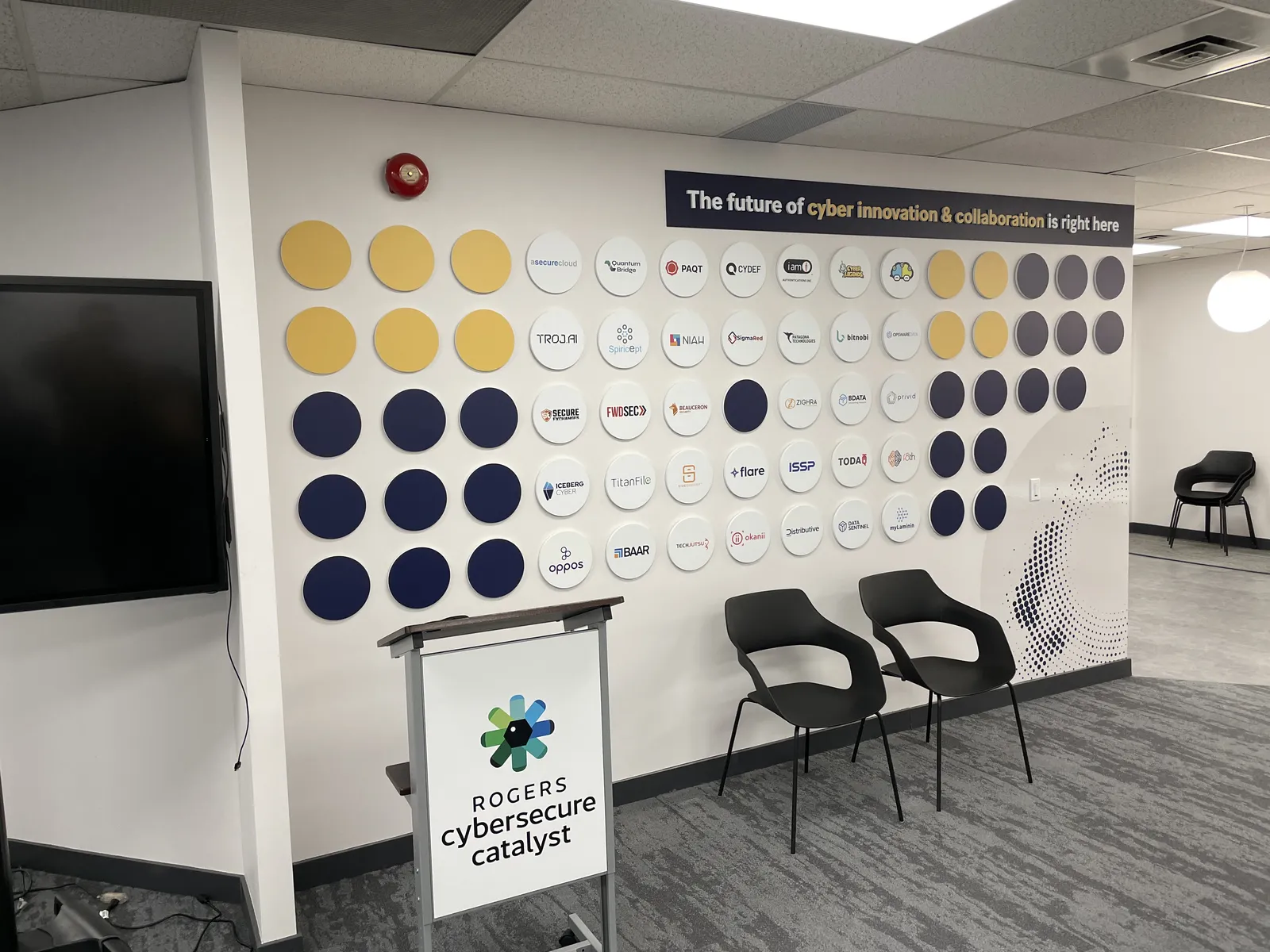
  • 3D Donor Recognition Wall — rigid signage produced and installed by IAC, Toronto
    Rigid Signage rigid signage Large format print
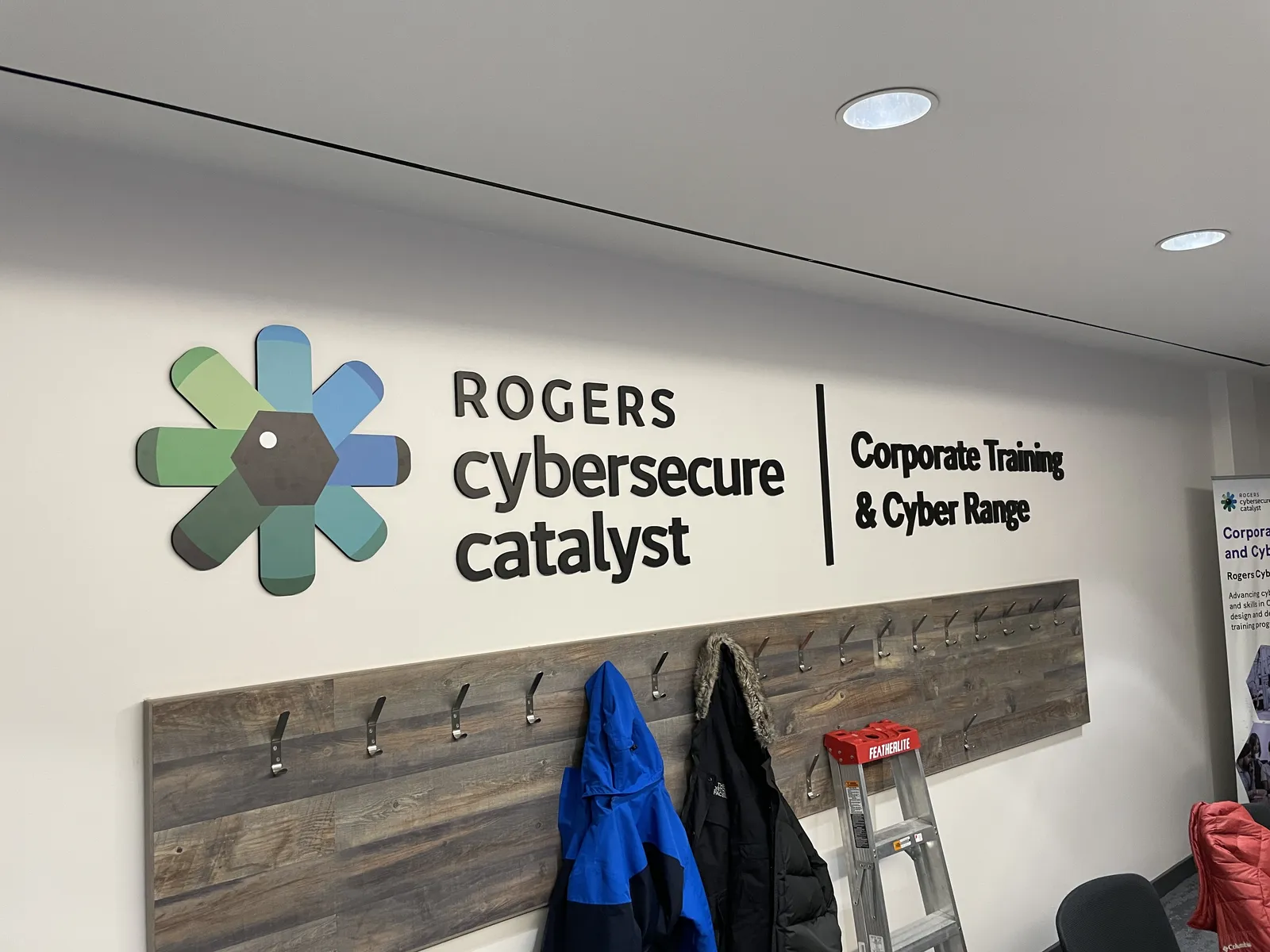
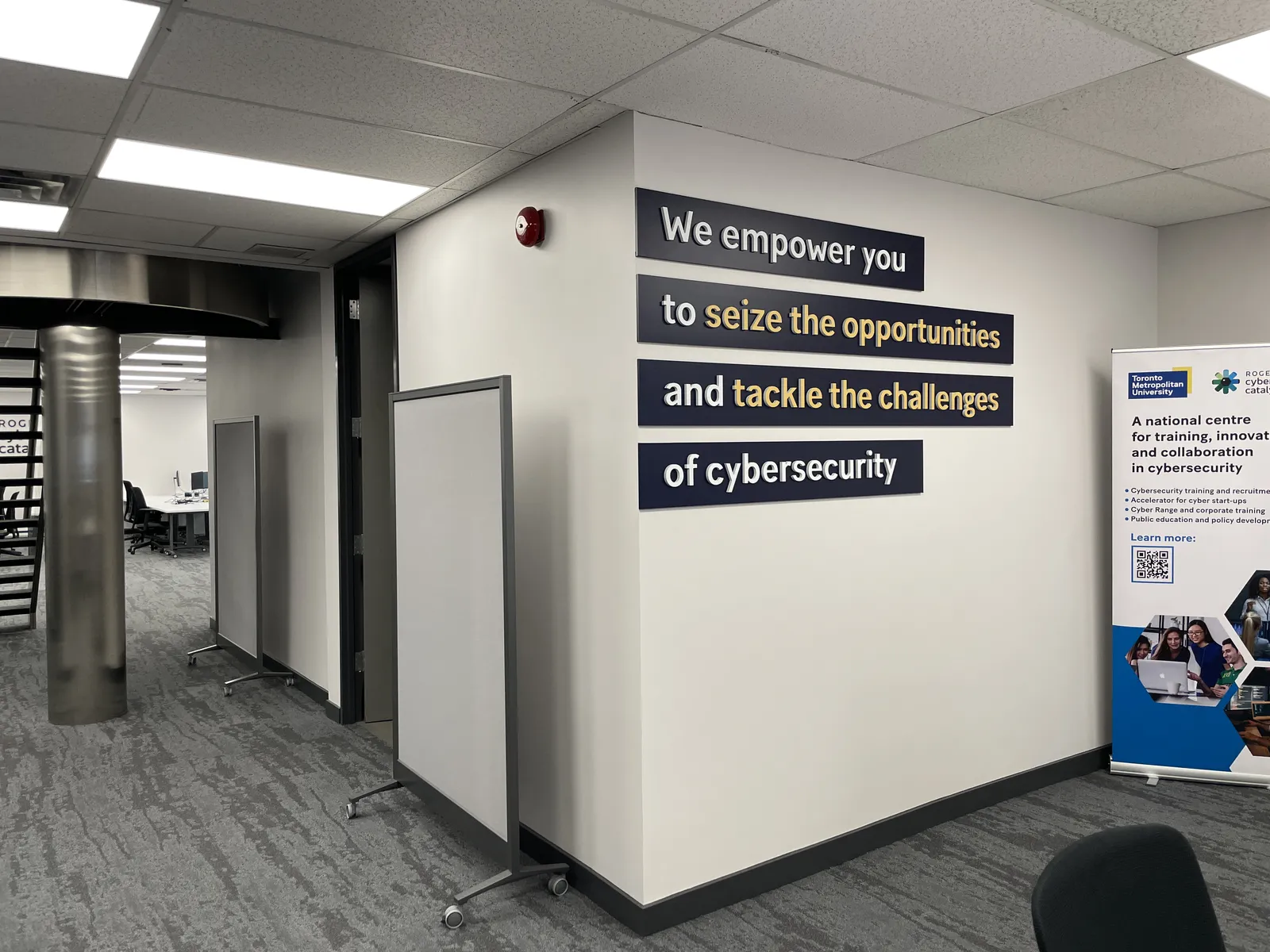
  • TMU Brampton 3D Letters 1 — rigid signage produced and installed by IAC, Toronto
    Rigid Signage rigid signage Large format print
  • TMU Brampton 3D Letters 2 — rigid signage produced and installed by IAC, Toronto
    Rigid Signage rigid signage Large format print
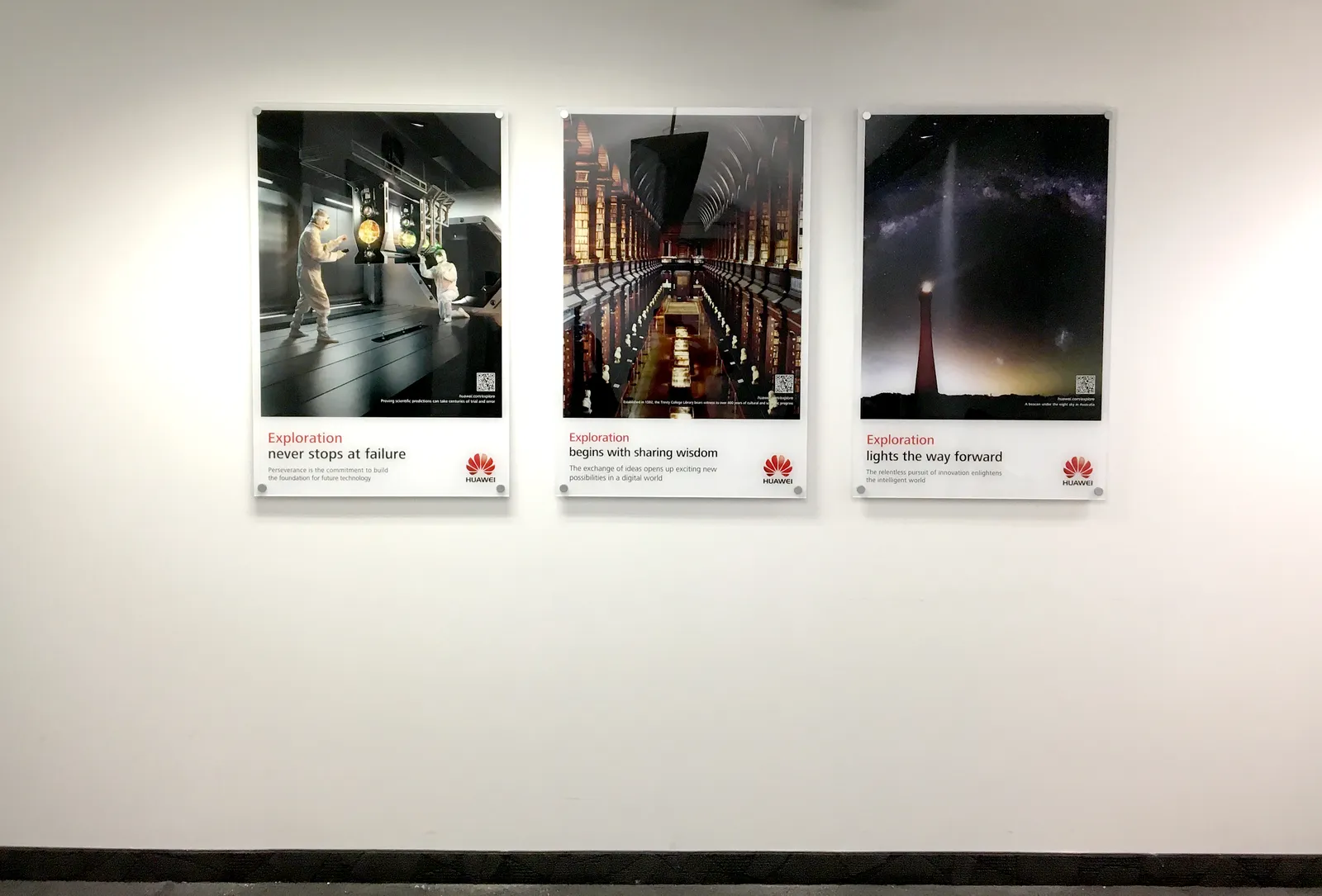
  • Huawei Acrylic 1 — rigid signage produced and installed by IAC, Toronto
    Rigid Signage rigid signage Large format print
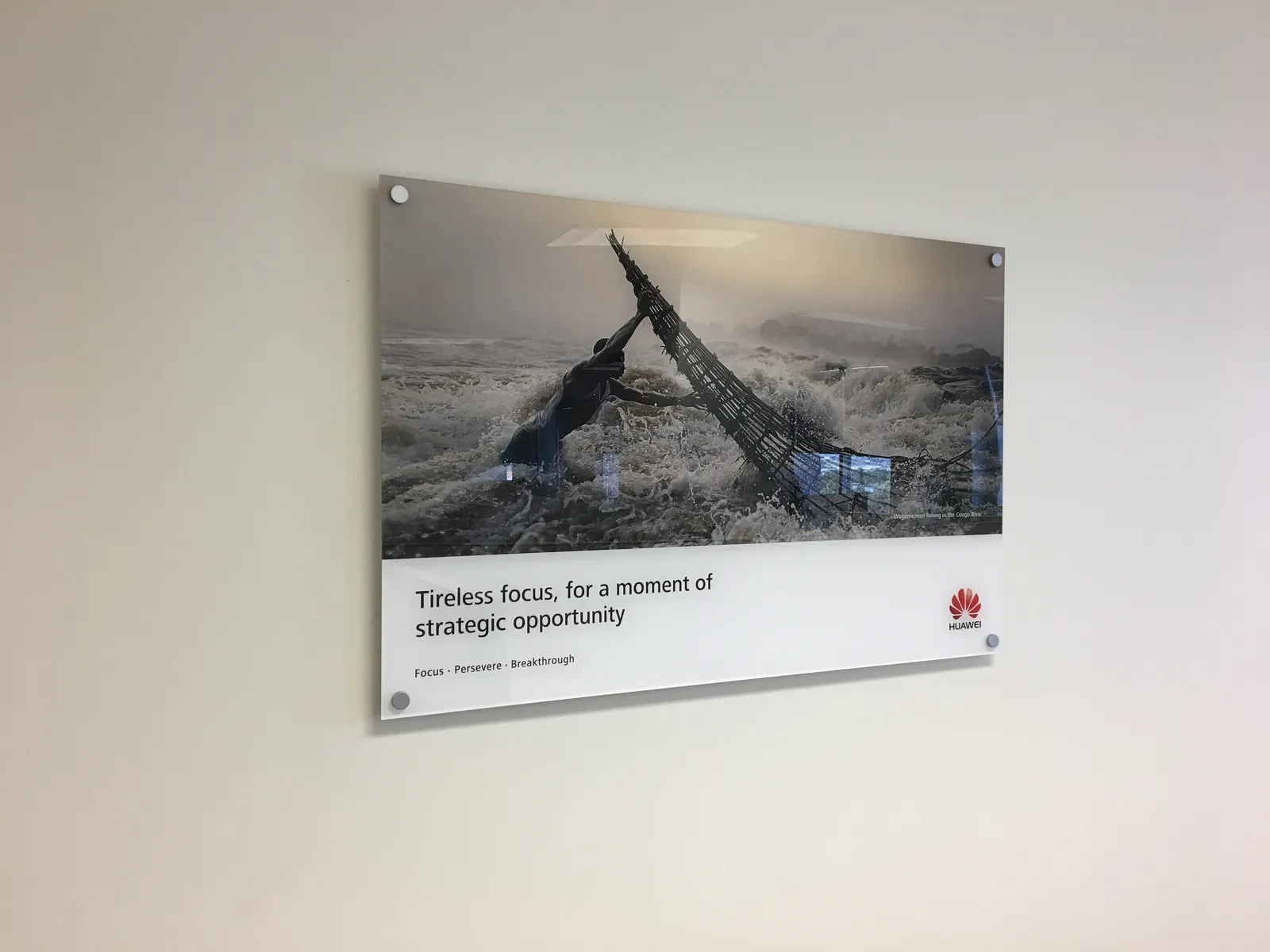
  • Huawei Acrylic 2 — rigid signage produced and installed by IAC, Toronto
    Rigid Signage rigid signage Large format print
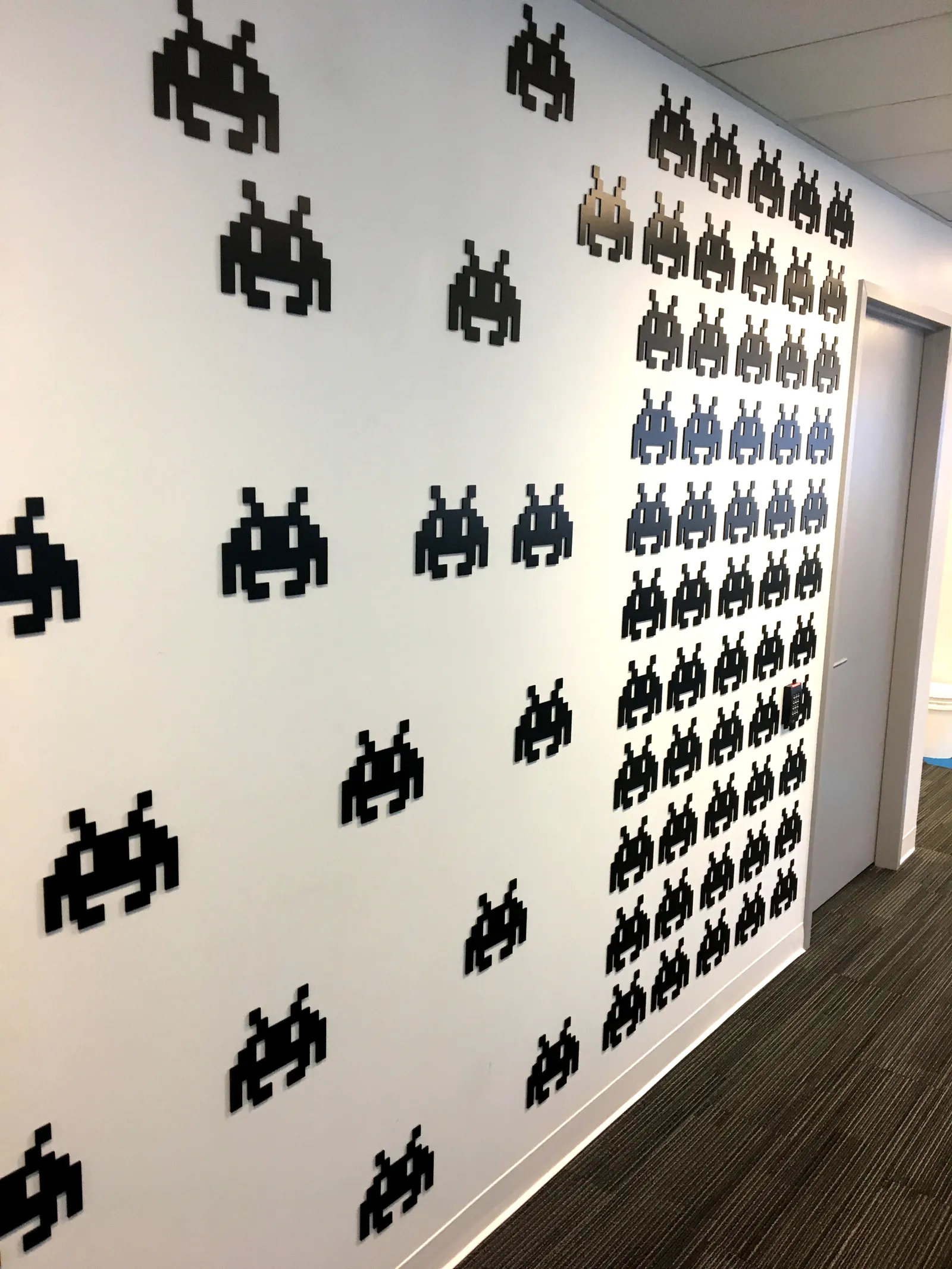
  • Space Invaders — rigid signage produced and installed by IAC, Toronto
    Rigid Signage rigid signage Large format print

FAQ

Rigid signage printed direct to substrate — questions

What is the best material for outdoor signs?

For permanent exterior signage, aluminum composite material like Dibond is the standard — it will not warp, rot or delaminate, takes a UV print well and can be routed and folded into finished edges. For temporary outdoor use such as real estate, events or election signage, coroplast is lighter and far cheaper and holds up for a season. Expanded PVC and foamboard are interior materials and will fail outdoors.

What is the difference between Sintra, coroplast and Dibond?

They are three different constructions. Coroplast is corrugated polypropylene with hollow flutes — light, cheap, visibly ribbed and temporary. Sintra is expanded PVC, a solid closed-cell sheet with a smooth matte face that machines cleanly and suits interior signage and dimensional letters. Dibond is aluminum composite — two aluminum skins over a plastic core — rigid, flat, weatherproof and the most durable and expensive of the three.

Can you cut rigid signs to a custom shape?

Yes. Our CNC routers cut printed rigid substrates to any contour, plus internal cutouts, radiused corners, and mounting or standoff holes. Because we print and route in the same facility against shared registration, the cut path lines up with the artwork consistently across a run. Supply your shape as a vector cut path in the artwork file and we will confirm minimum radii for the material.

Next step

Send your shape and size and we will recommend the substrate that fits the application.

Send drawings, a store list or a rough idea. We will come back with substrate options, hardware and a quote.