Product

Custom printed flooring and floor graphics

The floor is the largest unused surface in most retail spaces and exhibit booths, and the one people are already looking at. Printing it works — but only with media built for foot traffic and an overlaminate rated for slip resistance. Standard wall vinyl on a floor is a liability.

  • Floor-rated media with anti-slip textured overlaminate
  • Products for concrete, tile, hardwood, terrazzo and carpet
  • Contour-cut shapes, logos and directional markers
  • Printed floor mats for entrances, logos and standing positions
  • G-Floor printed polyvinyl covering — loose-lay, no adhesive, reusable
  • Full-coverage printed flooring for booths and activations
  • Removable adhesives that lift without residue
  • Panel layouts planned around traffic and seams

Media built to be walked on

Floor graphics use a heavier, more robust construction than wall vinyl, with an aggressive adhesive to resist edge lift from shoes and cart wheels, paired with a textured anti-slip overlaminate. That laminate does the real work — it takes the abrasion, protects the print from scuffing and provides the surface texture that maintains traction when the floor is wet. Slip resistance is measured under standards such as ASTM D2047, and floor-rated laminates are specified against them. Products differ considerably by surface type, so a graphic destined for polished concrete and one for low-pile carpet are not the same build.
Three ways to put a graphic on a floor

They are different products, not three words for the same one, and the right choice usually comes down to how long it stays and what is underneath. Adhesive floor graphics stick directly to the existing floor — the fastest option, the cleanest edge, and the one that leaves nothing behind when it is specified and removed correctly. G-Floor is a printed polyvinyl floor covering that rolls out loose over the existing surface with no adhesive at all: heavier, laid rather than stuck, and reusable, which makes it the sensible choice for touring builds, repeated activations, and any floor you are not allowed to apply adhesive to. Printed floor mats are discrete pieces rather than a covering — entrance mats, logo mats, standing positions — and they lift and move without touching the floor beneath. Tell us how long it needs to last, whether it travels, and what the existing floor is, and we will tell you which of the three you actually want.

Matching the media to the floor

Smooth sealed surfaces — polished concrete, vinyl tile, sealed hardwood, terrazzo — take standard floor media well provided the surface is clean and fully cured. Carpet needs a specific carpet-adhesive product that grips loop and low-pile fibre and releases without leaving residue. Textured and non-slip safety flooring is the hardest case, because the adhesive cannot reach enough surface area to hold. Exterior and short-term outdoor placements need weather-rated media with a correspondingly aggressive adhesive. We ask what the floor is before quoting, every time.

Full-coverage printed flooring for events and exhibits

Beyond decals, entire floors get printed. Exhibit booths run full-coverage printed vinyl over subfloor to carry a brand environment right to the aisle edge. Pop-ups and activations use printed flooring to transform a bare space overnight. Retail uses it for shop-in-shop zones and seasonal takeovers. These jobs need panel layout planning — seam placement away from high-traffic lines, artwork tiled with registration allowance, and edge treatment so nothing is a trip hazard. We plan the panelisation with the install in mind.

Examples

Related work

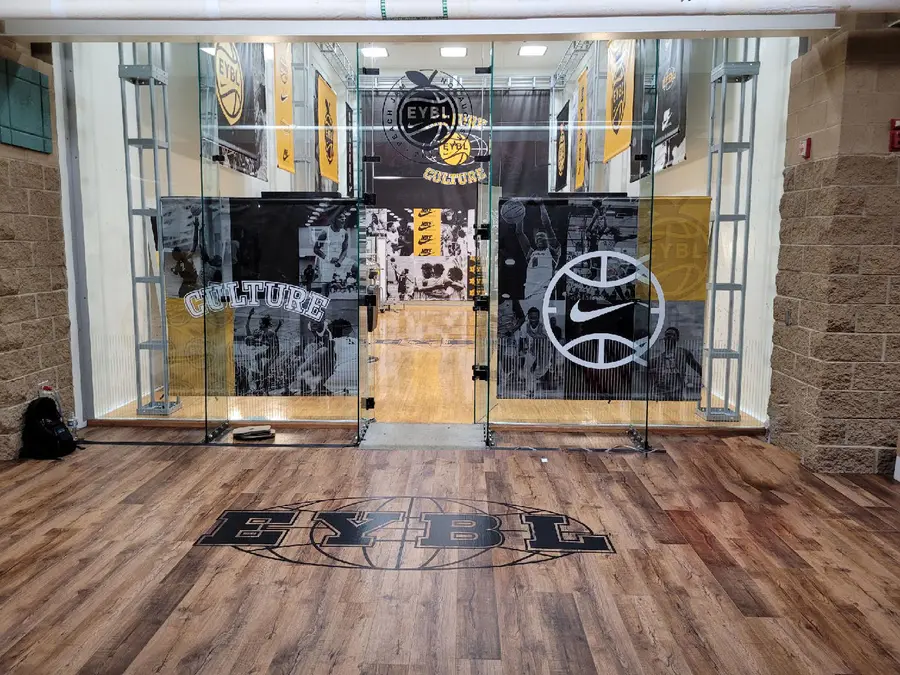
  • Hanging Banners, Vinyl Cut Wall and Floor Graphics produced by IAC for Taylor / Nike
    Taylor / Nike Hanging Banners, Vinyl Cut Wall and Floor Graphics LED Printing w/ Coreflex Media
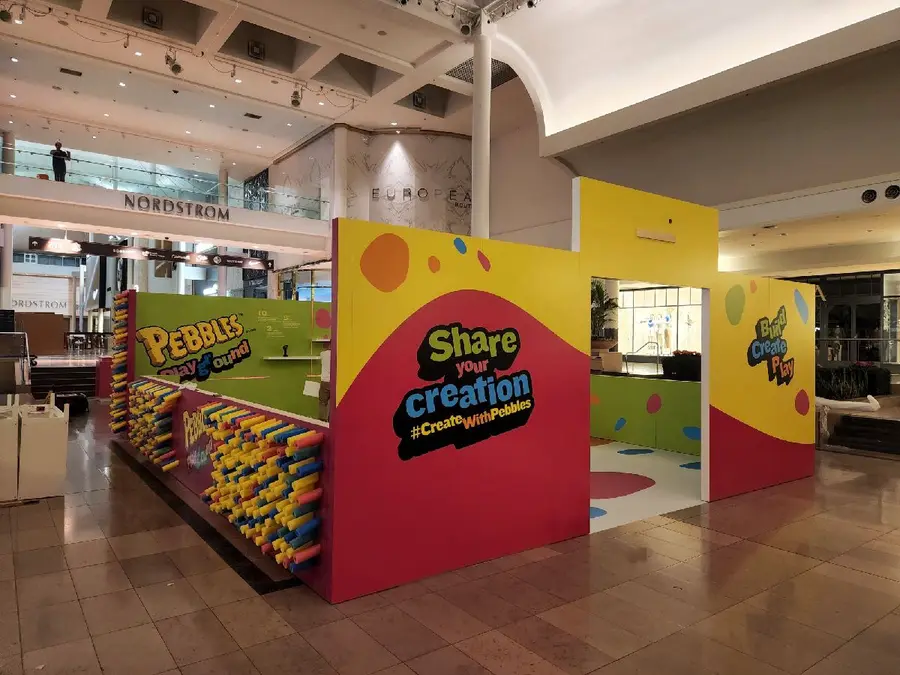
  • Pop up Shop. Pressure sensitive vinyl and floor graphics — large format project produced by IAC in Toronto
    Flooring Pop up Shop. Pressure sensitive vinyl and floor graphics
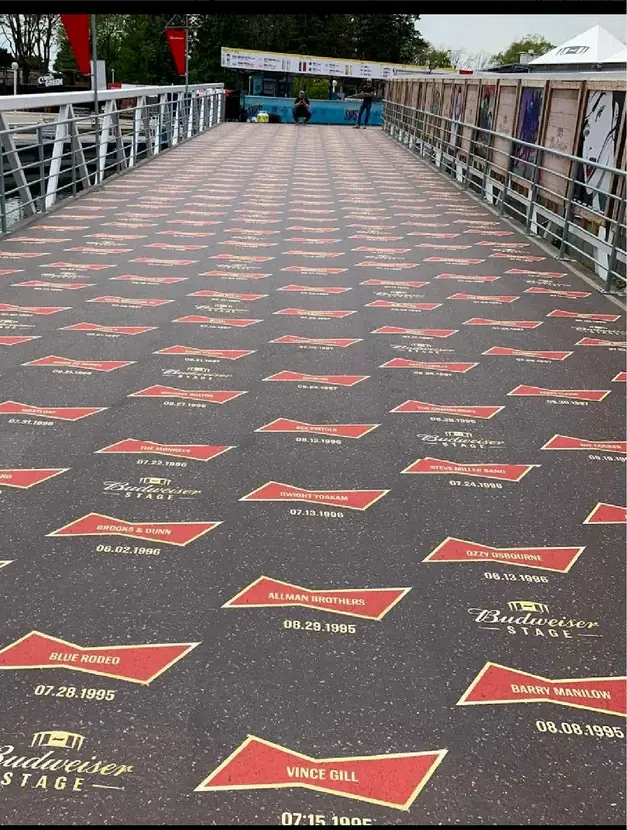
  • Printed non-slip walkway graphics naming performers by date, Budweiser Stage, Toronto
    Flooring Walk of Fame walkway, Budweiser Stage Printed flooring

FAQ

Custom printed flooring and floor graphics — questions

Are printed floor graphics slippery?

Not when they are built properly. Floor graphics are finished with a textured anti-slip overlaminate specifically engineered to maintain traction, and those laminates are tested against recognised slip resistance standards. The risk comes from using ordinary print vinyl or a gloss wall laminate on a floor, which can be genuinely dangerous when wet. Always specify floor-rated media, and keep graphics away from entrances where water is tracked in.

Will floor graphics stick to carpet?

Yes, with the right product. Carpet requires a purpose-built adhesive that grips fibre rather than a smooth surface, and it works best on loop or low-pile commercial carpet — deep or plush pile does not hold a graphic reliably. These products are designed to release cleanly at the end of an event without pulling fibre or leaving residue. Tell us the carpet type and we will confirm suitability before printing.

How long will a floor graphic last?

It is a function of traffic, not time. A graphic in a low-traffic booth corner can look new after a long run, while the same build in a mall entrance takes visible wear far sooner. Anti-slip laminate substantially extends useful life. For long-term retail placement we spec heavier media and a more durable laminate; for a three-day show, lighter and removable is the smarter spend.

What is G-Floor, and when is it better than an adhesive graphic?

G-Floor is a printed polyvinyl floor covering that lies loose over the existing floor rather than sticking to it. Because there is no adhesive, it comes up without residue, rolls for transport and goes down again somewhere else — so it suits touring exhibits, repeated activations, and venues that will not permit anything adhesive on their floor. The trade is weight and cost: it is a covering rather than a decal, so a short one-off promotion in your own space is usually better served by adhesive vinyl. If the graphic has to travel or the floor is not yours to stick to, G-Floor is the answer.

Next step

Tell us your floor surface and traffic level and we will spec media that lasts.

Send drawings, a store list or a rough idea. We will come back with substrate options, hardware and a quote.