Product

Vinyl graphics for walls, windows, glass and vehicles

Self-adhesive vinyl remains the most adaptable material in wide format. It wraps compound curves, sticks to glass, brick, drywall and sheet metal, cuts to any contour and comes off cleanly when specified correctly. The whole outcome depends on picking the right film and the right laminate for the surface.

  • Cast and calendered printable films including 3M
  • Matched gloss, matte, textured and anti-graffiti overlaminates
  • Air-release adhesive for bubble-free installation
  • Contour cutting, kiss-cutting and cut vinyl lettering
  • Removable adhesives for leased and temporary spaces
  • Wall, window, glass, floor, fixture and vehicle applications

Cast versus calendered, and why it matters

Calendered vinyl is rolled from an extruded sheet. It is thicker, less expensive, dimensionally less stable and prone to shrink back over time — appropriate for flat, short to medium-term applications like window decals and interior signage. Cast vinyl is produced from a liquid poured and cured at thickness, leaving almost no residual stress. It is thinner, far more conformable and holds its dimension for years, which is why vehicle wraps, riveted surfaces and compound curves demand it. Choosing calendered film for a curved long-term application is the single most common cause of lifting edges and premature failure.
Air-release adhesives and overlaminates

Modern printable films use air-release liners with micro-channels in the adhesive so trapped air escapes under a squeegee instead of forming bubbles, and slideable adhesives that let an installer reposition a large panel before committing. Overlaminate does the rest of the work — protecting print from abrasion and UV, and setting the finish. Gloss lifts saturation and suits vehicles and retail; matte kills reflection and is the right choice for interiors, boardrooms and anything photographed; textured and anti-graffiti laminates handle high-touch and public-facing surfaces. We match film and laminate as a system.

Surfaces, prep and removability

Vinyl is only as good as what it is stuck to. Smooth painted drywall, glass and sealed metal are ideal. Heavily textured walls, unsealed masonry and low-energy plastics need either a textured-surface film or a different approach entirely. Freshly painted walls should cure fully before application or the adhesive can pull paint on removal. For leased offices and temporary retail, removable-adhesive films come off with heat and leave no residue. Tell us the substrate and the intended lifespan and we will spec accordingly rather than guessing.

Examples

Related work

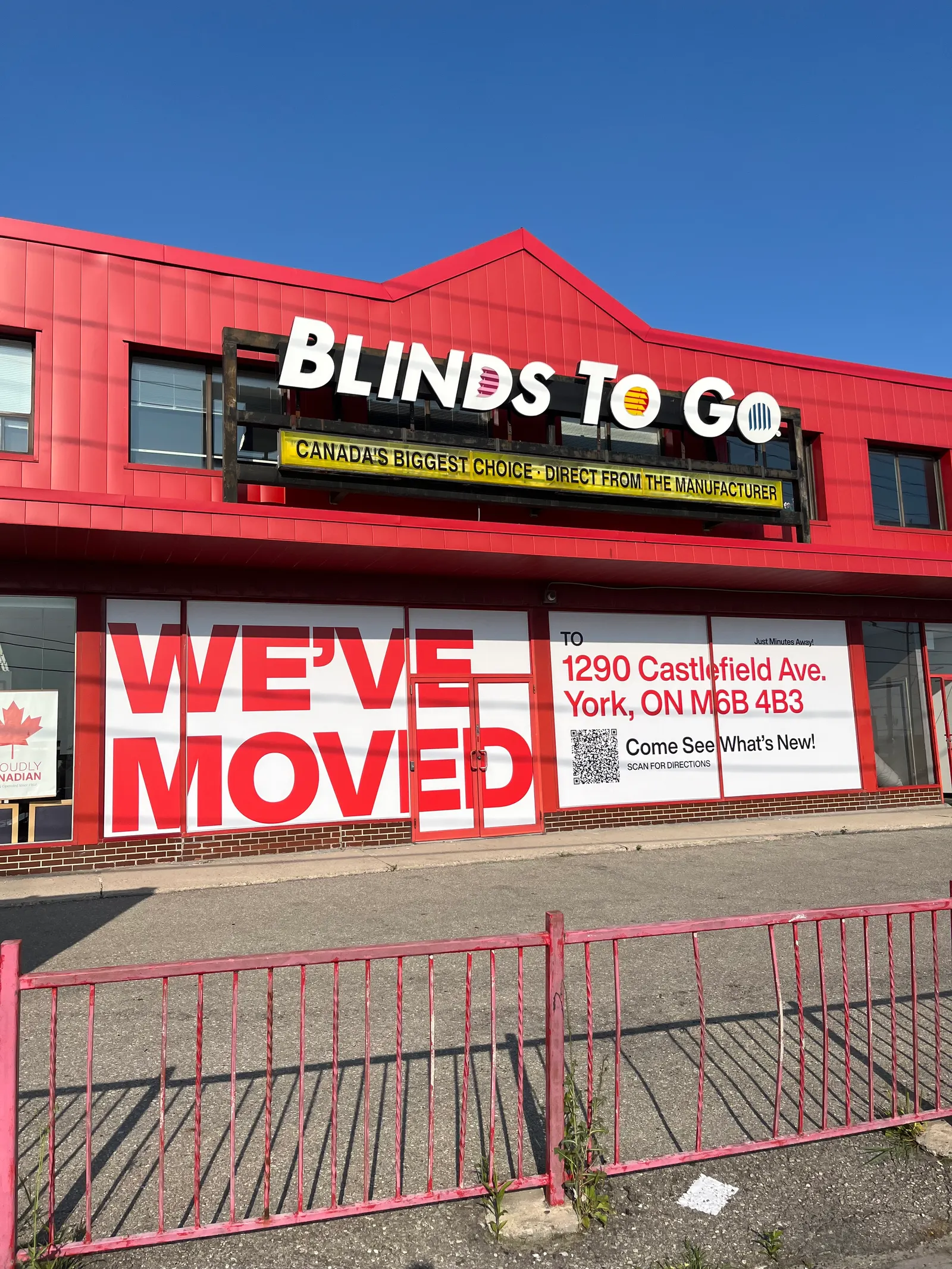
  • The original Blinds To Go location displays a We've Moved message on its window signage directing customers to a new address.
    Windows Blinds To Go storefront with We've Moved window signage Large format print
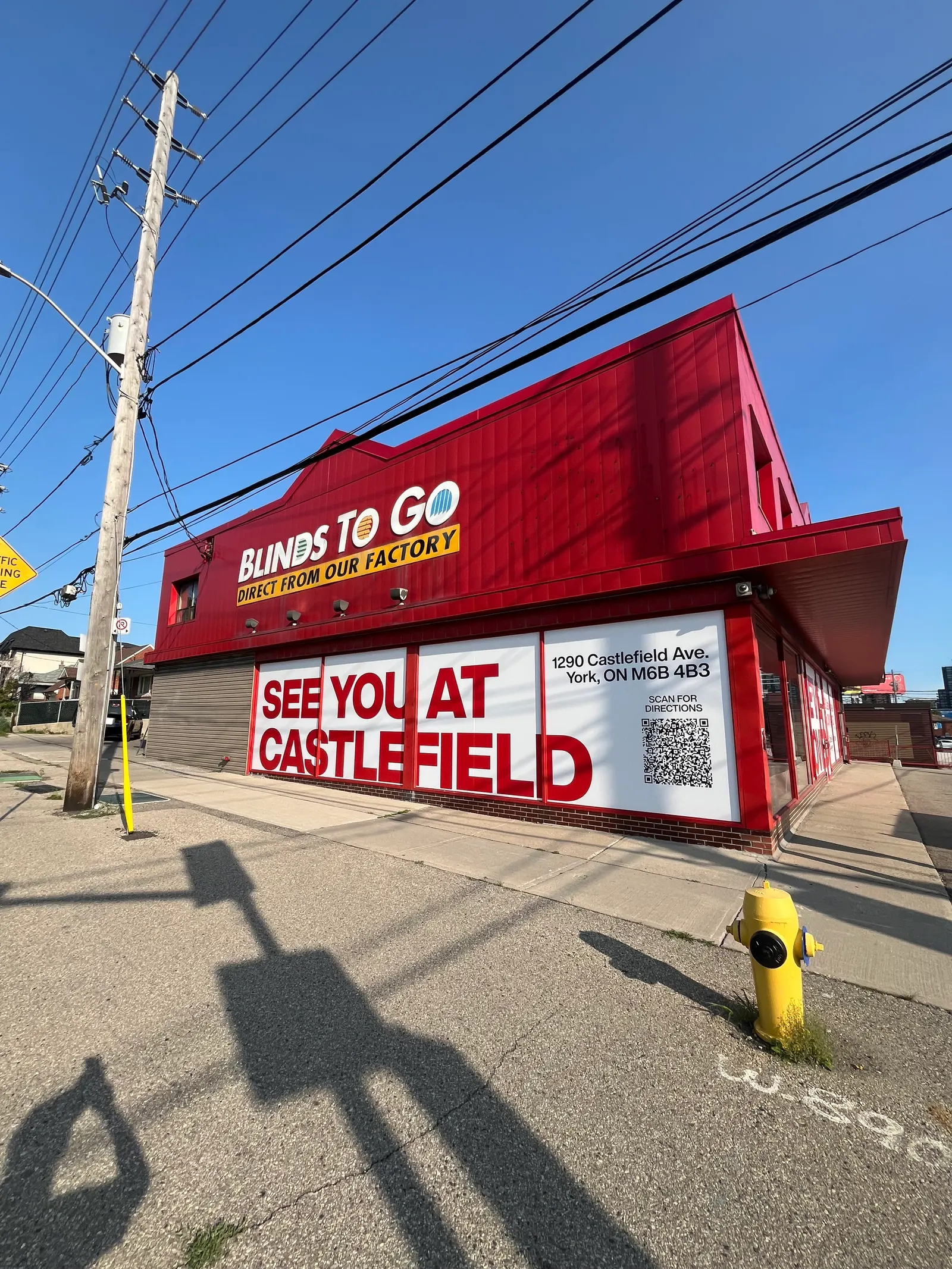
  • The Blinds To Go location on Castlefield Avenue shows redirect window signage including a QR code on the storefront.
    Windows Blinds To Go Castlefield Avenue storefront with redirect signage Large format print
  • Window Graphics produced by IAC for Aviva Insurance
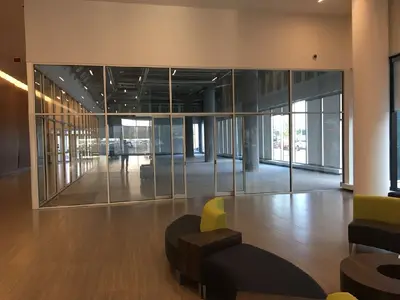
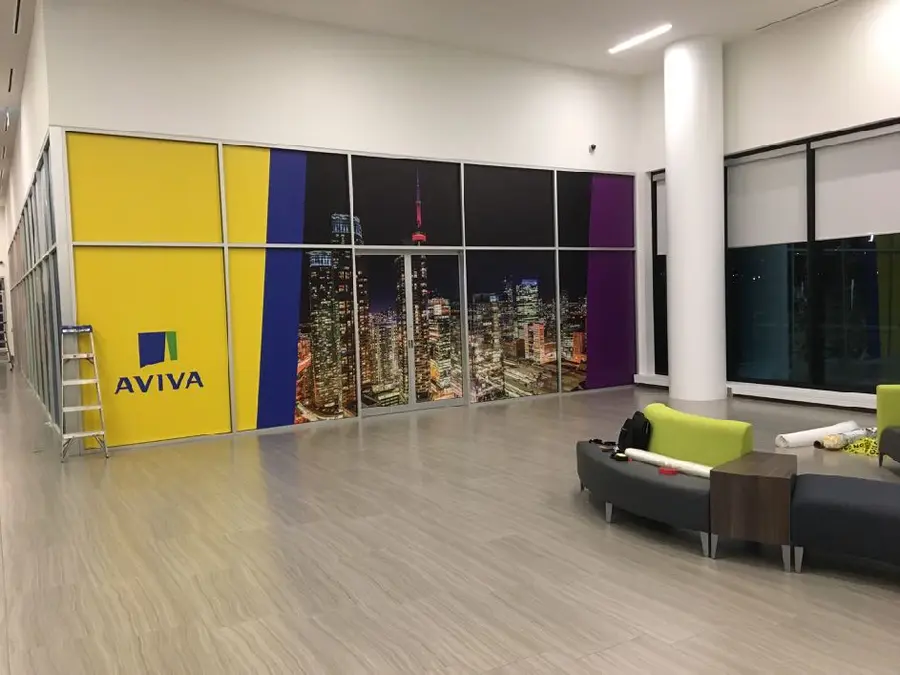
    Aviva Insurance Window Graphics LED Printing w/ 3M media
  • Window Graphics produced by IAC for Aviva Insurance
    Aviva Insurance Window Graphics LED Printing w/ 3M media

FAQ

Vinyl graphics for walls, windows, glass and vehicles — questions

How long do vinyl wall and window graphics last?

Interior graphics on suitable surfaces routinely last for years, because the enemies are UV and weather and there is little of either indoors. Exterior life depends on film grade, laminate and orientation — a laminated cast film on a shaded wall dramatically outlasts an unlaminated calendered film in full southern sun. Rather than quote a number, we spec to your intended lifespan, so tell us whether the graphic is up for a season or a decade.

Will vinyl damage my walls when removed?

Not if the film and the wall are both right. Removable-adhesive films lift cleanly from properly cured, sealed painted surfaces with heat and slow peeling. Problems come from applying to fresh paint that has not cured, from poor-quality or flaking paint, and from using permanent adhesive where removable was needed. If you are in leased premises, say so when you quote and we will spec a removable film.

Can you print vinyl to match a specific Pantone colour?

We target Pantone references as closely as CMYK process printing allows on a given substrate, and for most brand colours the match is very close. Some Pantones — particularly bright oranges, deep blues and metallics — fall outside process gamut and cannot be hit exactly. Where an exact match is critical we can use pre-coloured cut vinyl instead of printing. Send your Pantone numbers with the artwork.

Next step

Tell us the surface and the timeframe and we will spec the right film for the job.

Send drawings, a store list or a rough idea. We will come back with substrate options, hardware and a quote.