Industry

Film and TV — cut to the shooting schedule

Production schedules do not move because a backdrop is not ready. Locations fall through, scripts change, a set gets redressed over a weekend and the art department needs a forty-foot translight on Monday. Everything we make for this market is built around that reality: made to order in days rather than weeks, in Toronto, so nothing sits on a truck at a border crossing.

  • Translights and backdrops to 16 ft x 150 ft in one seamless piece
  • Scrim vinyl or fabric, front-lit or backlit
  • Day/night backdrops that change with set lighting
  • Roll-down custom flooring — reusable or permanently installed
  • Faux glass: stained, wire, frosted and winter frost effects
  • Custom wall coverings in eco-friendly wallpaper or vinyl
  • Faux stone, marble and period finishes in high-gloss vinyl
  • Made to order in days, in Toronto

Translights and backlit backdrops

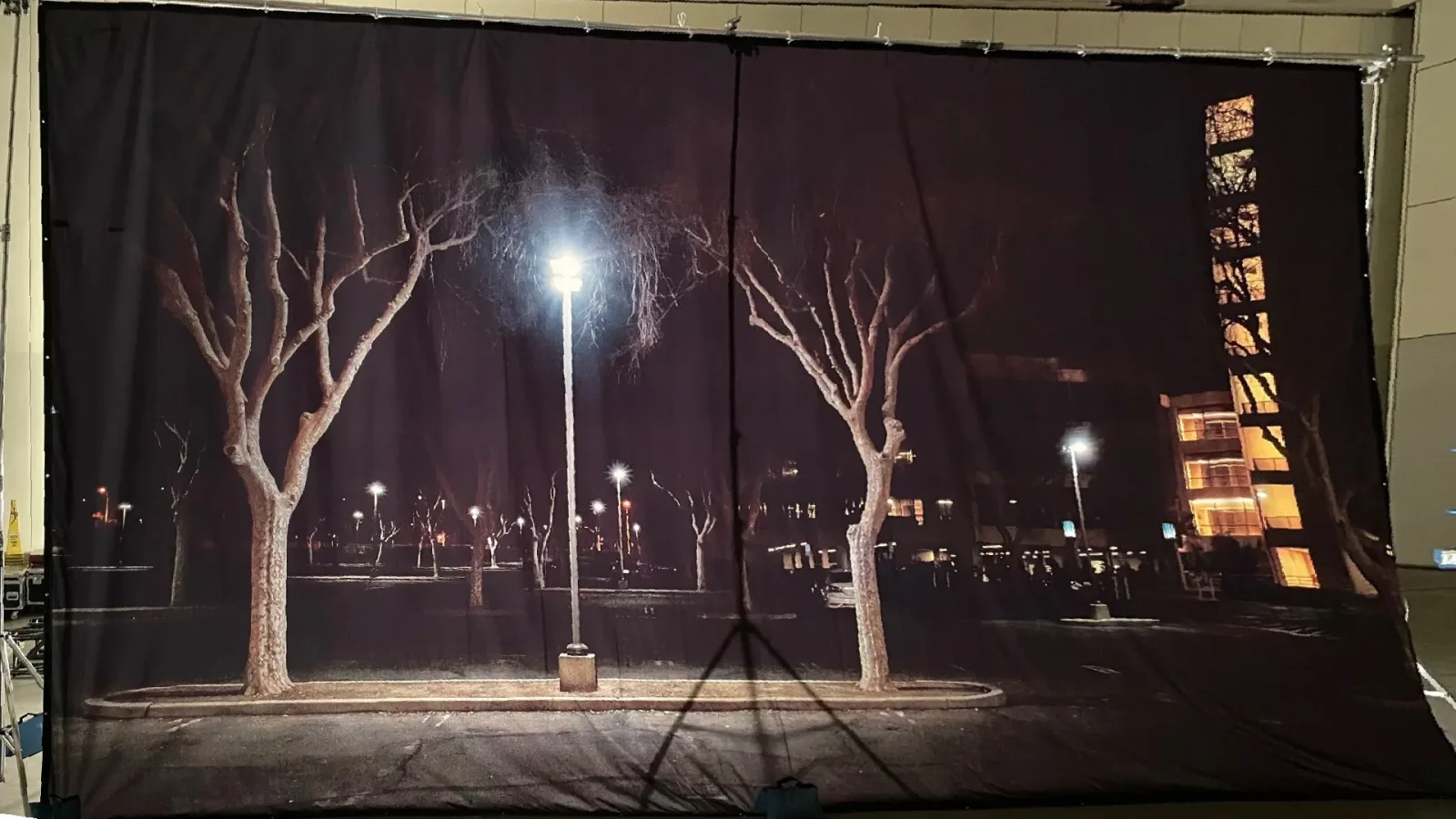
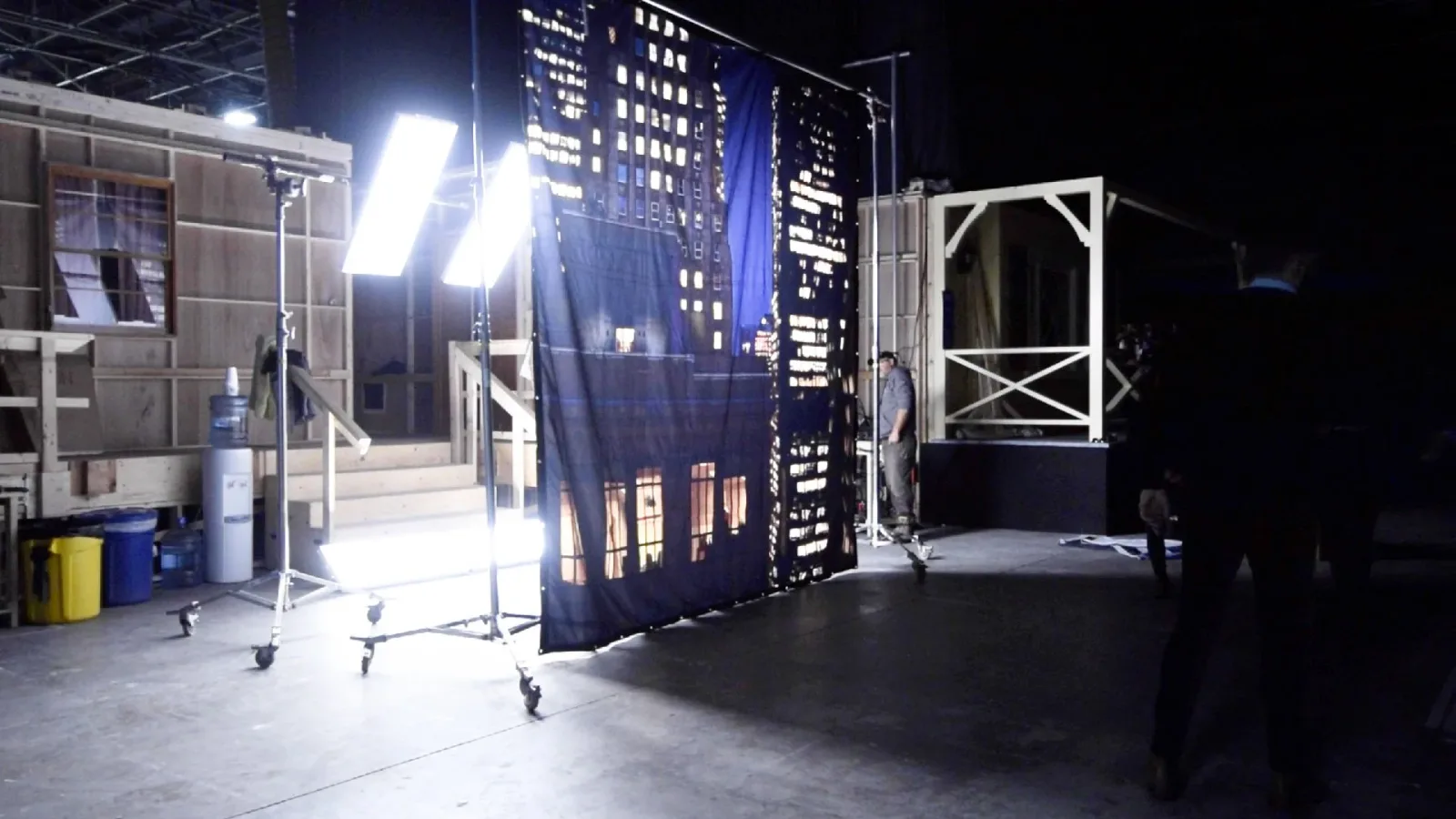
Translights, translites, backlit backdrops — whatever the department calls them, they are the same problem: a photographic image that has to read as a real view through a window when it is lit from behind. We print them on scrim vinyl or fabric up to 16 feet by 150 feet in a single piece, and seam beyond that when a stage needs more. The single-piece size matters more here than anywhere else we work. A seam that would vanish on a trade show wall is a line across the skyline outside your hero window, and it will find the camera in the one take that works. Backlit material also punishes an artwork file that front-lit material would forgive, because light passing through the substrate reveals banding and compression that light bouncing off it hides.
Front-lit and day/night backdrops

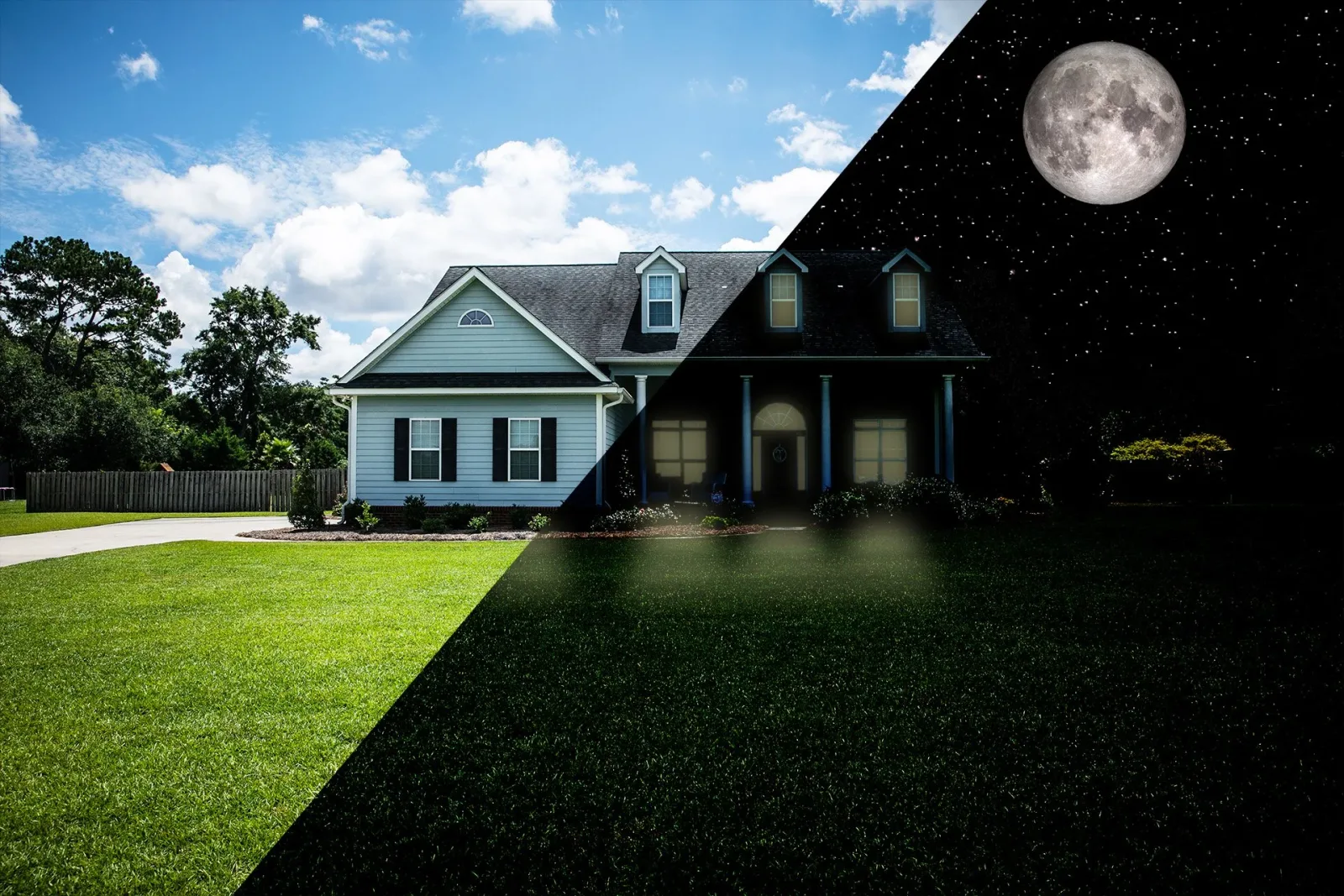
Not every backing wants to be lit from behind. Front-lit backdrops in fabric or vinyl scrim cover the same sizes and suit exteriors, corridors and anywhere the grip package is already pointed at the wall. Day/night backdrops earn their keep on schedule rather than on looks. One backdrop, printed so that the scene reads as daylight under front light and as dusk or night when the balance shifts to backlight — and any point in between. It means a set can play two times of day without a change-over, which on a tight stage day is the difference between making the schedule and losing an hour to a swap.

Floors, walls and glass

A convincing set is mostly surfaces, and most of them are faster to print than to build. Custom roll-down flooring prints to any finish — distressed tile, worn concrete, institutional linoleum — and can be permanently installed or rolled up and reused on the next production. Custom wall coverings come in eco-friendly wallpaper or vinyl with a matte, satin or gloss finish, which matters when a wall has to sit under a hard key without flaring. Faux glass effects go onto existing windows as clear or frosted vinyl, or arrive as ready-to-install plexiglass panels: stained glass, wire-reinforced security glass, frosted office glazing, winter frost. And high-gloss adhesive vinyl turns MDF into marble, stone or a period kitchen counter at a fraction of the cost of the real material, with none of the weight.

Recent productions

Gotham Knights came to us for the large backings — among them a 70 by 16 foot piece and a 20 by 20, printed and delivered to a series schedule. We have also worked on Recipe for Disaster, Mittens and Pants, and commercial work for McDonald's. Most of what we make for this industry never carries a credit, because a backdrop that is doing its job is not something the audience is meant to notice. The productions named here are the ones we are able to talk about.

Working with the art department

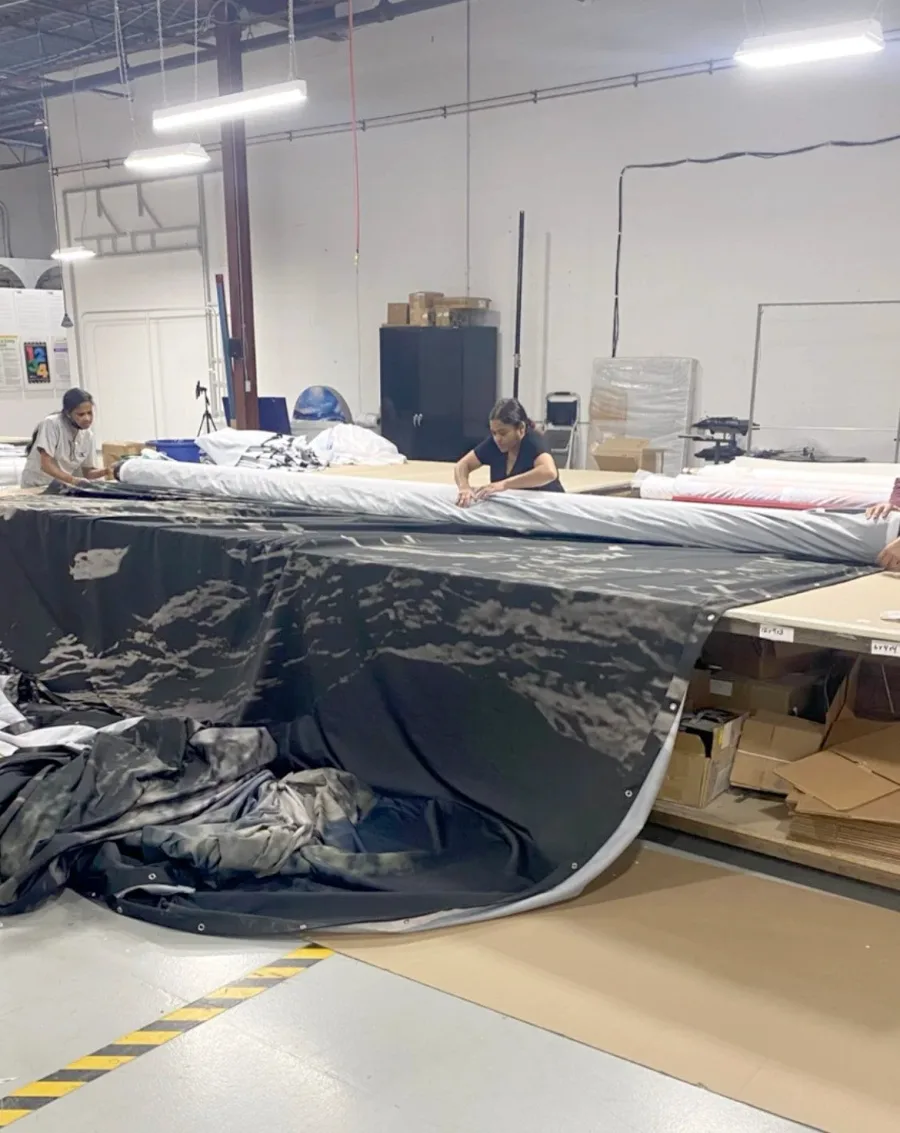
Most of what we do here starts as a reference photo, a location scout still, or a concept frame from the production designer — not a print-ready file. We are used to that. Send what you have and we will tell you honestly whether it will hold at the finished size, because a 3000-pixel scout photo blown to 40 feet is a conversation worth having before it is on the stage rather than after. Everything is printed, cut, sewn and finished in our own Toronto shop rather than brokered out, so a revised panel is a same-week problem rather than a next-shipment one, and you can come and look at it on the table before it ships.

Examples

Selected work

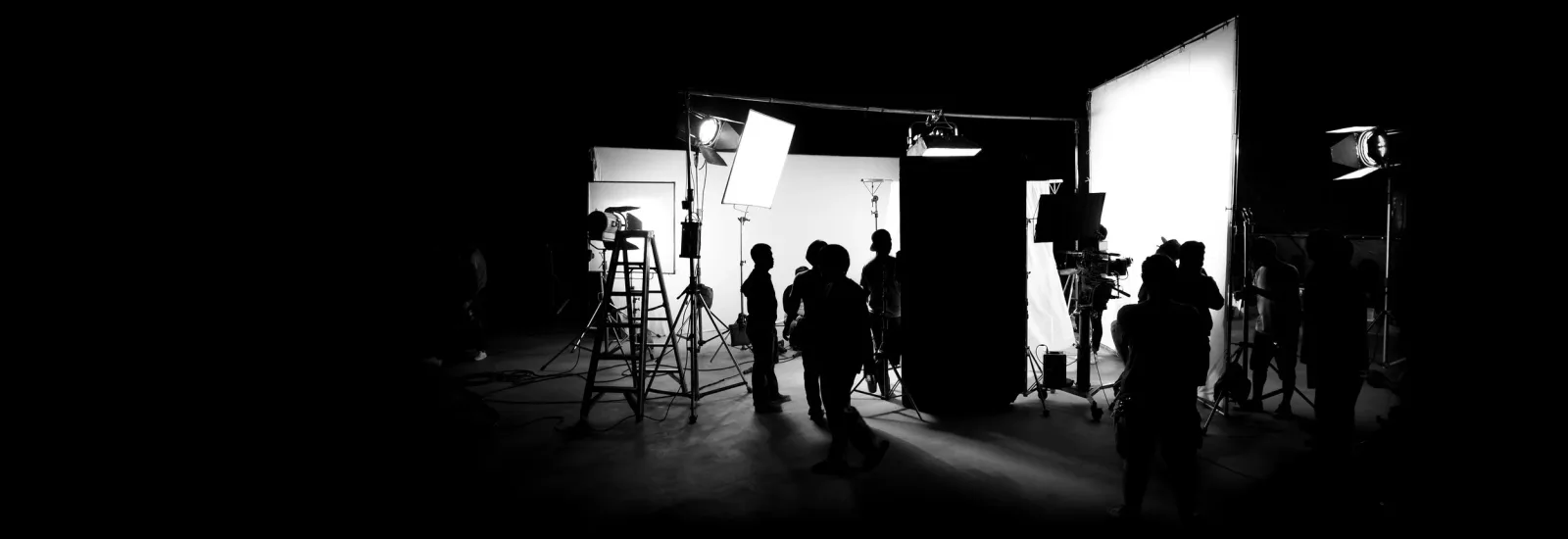
  • Printed backdrop dressed on a film set — produced by IAC, Toronto
    Film & TV Printed backdrop dressed on a film set Large format print for film and television
  • Backlit fabric translight lighting a night exterior — produced by IAC, Toronto
    Film & TV Backlit fabric translight lighting a night exterior Large format print for film and television
  • Translight backdrop lit from behind on stage — produced by IAC, Toronto
    Film & TV Translight backdrop lit from behind on stage Large format print for film and television
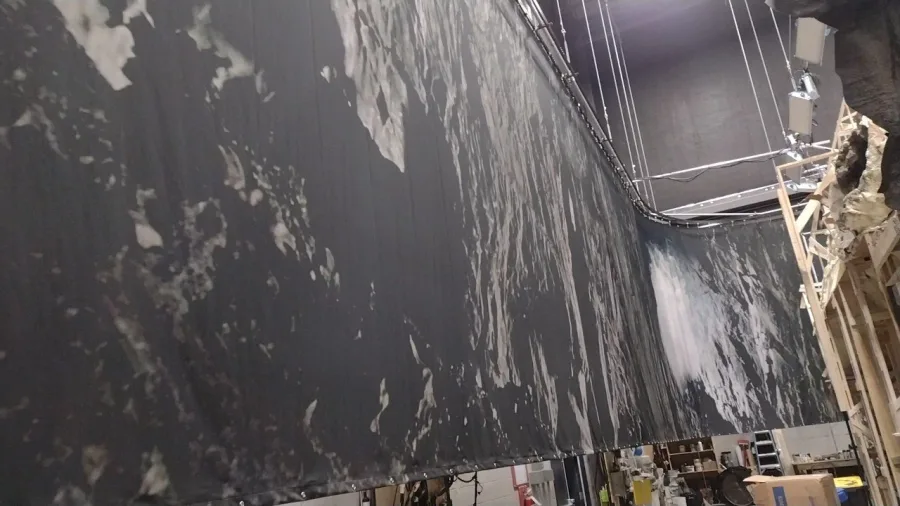
  • 70 ft by 16 ft seamless printed backdrop for Gotham Knights, produced by IAC in Toronto
    Gotham Knights 70 ft by 16 ft printed backdrop for Gotham Knights Large format print for film and television
  • Large printed backdrop dressed on the Gotham Knights set, produced by IAC in Toronto
    Gotham Knights Printed scenic backdrop on the Gotham Knights set Large format print for film and television
  • Day/night backdrop that shifts from daylight to dusk with set lighting — produced by IAC, Toronto
    Film & TV Day/night backdrop that shifts from daylight to dusk with set lighting Large format print for film and television

Brands we produce for

FAQ

Common questions

What is the difference between a translight and a regular backdrop?

A translight is designed to be lit from behind, so the image transmits through the material rather than bouncing off it. That is what makes a night cityscape outside a window read as real depth instead of as a photograph on a wall. A front-lit backdrop is lit from the set side and behaves like any other printed surface. The choice is usually made by your gaffer and the stage layout rather than by the image — if there is room and power behind the backing, backlit almost always looks better through a window. Tell us which it is before we print, because the material and the file preparation differ.

How quickly can you turn around a backdrop?

Days rather than weeks for most work, which is why productions call us. The honest constraint is rarely our press — it is artwork. If a print-ready file at adequate resolution arrives in the morning, production is fast. If we are working from a scout photo that needs retouching and upscaling before it will hold at forty feet, that step sets the schedule. Call us as early as you can, even before the file exists, and we will tell you what we need.

What resolution does artwork need to be for a 40-foot backdrop?

Less than you would fear, because the camera is not standing six inches away. What matters is resolution at viewing distance, and for a backdrop that is usually well behind the actors and often slightly out of focus, the bar is far lower than for a printed graphic someone reads up close. Backlit work is the exception — light passing through the material reveals banding and JPEG artefacts that front-lit printing conceals. Send us the largest original you have, tell us the finished size and roughly how close the camera gets, and we will tell you whether it holds.

Can printed set flooring be reused on another production?

Yes, if it is specified for it. Roll-down flooring can be permanently installed or laid so it lifts and rolls up at wrap for reuse — the difference is in the adhesive and the substrate, decided before we print rather than after. Tell us at the quote stage if a floor has a second life planned. Productions that shoot recurring sets across seasons get the most out of this.

Do you work directly with art departments and set decorators?

Most of this work comes to us that way — production designers, art directors, set decorators and construction coordinators, sometimes through a studio's own purchasing, sometimes direct. We are comfortable quoting from a concept frame or a location still rather than a finished file, and we will flag a problem with an image before it becomes a problem on the stage.

Next step

Send a reference image and a finished size, and we will come back with a price and an honest read on whether the file will hold.

Send drawings, a store list or a rough idea. We will come back with substrate options, hardware and a quote.