Retail
Retail lightboxes with swappable backlit fabric faces
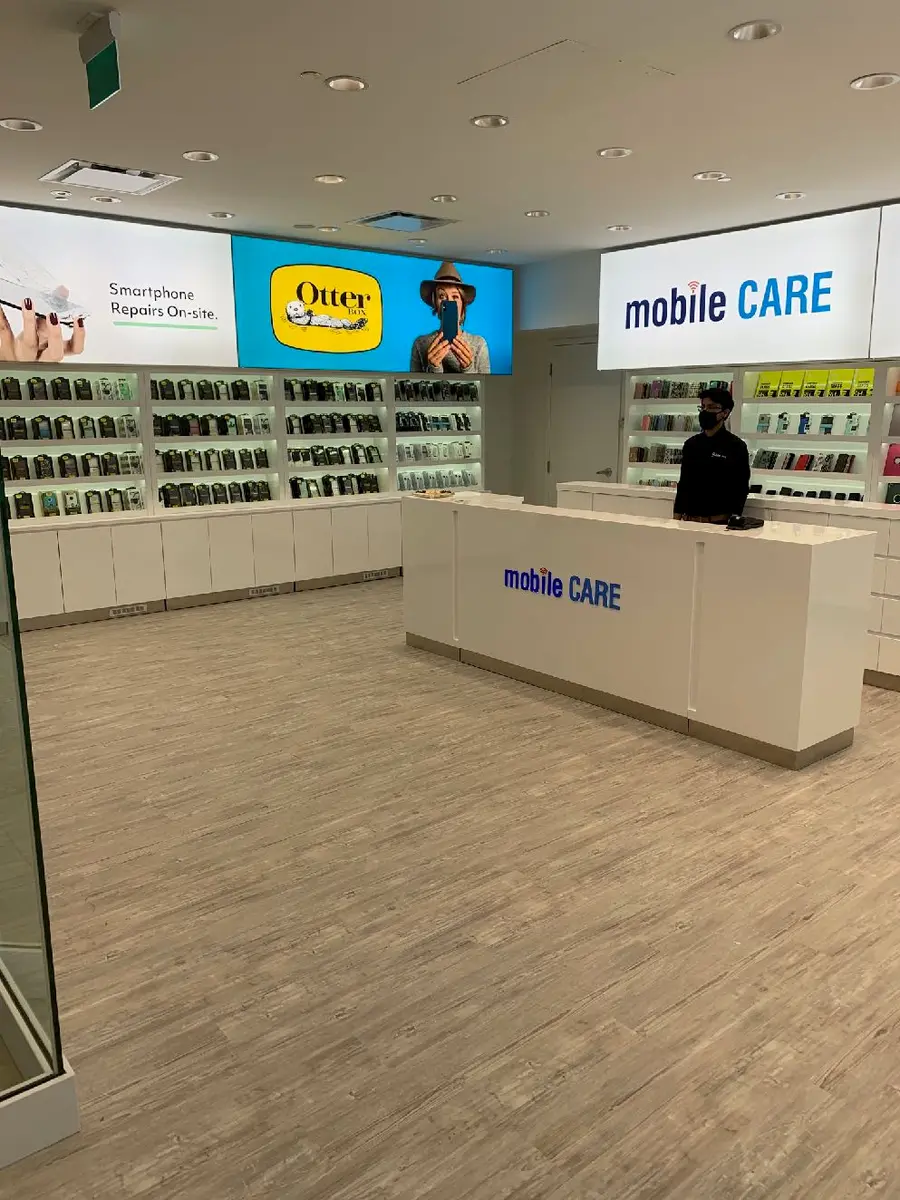
Lightboxes with backlit fabric graphics produced for Mobile Care. In a retail environment the box is a permanent fixture and the graphic is a consumable, so the build has to separate the two: hardware that stays on the wall for years and a face that changes as often as the campaign does.
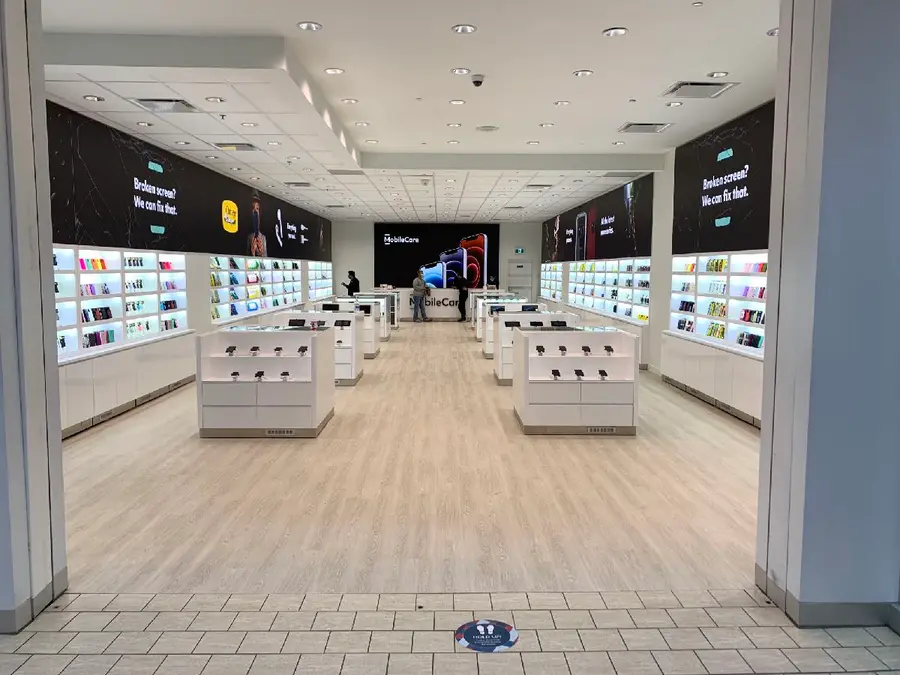
What the job demanded
Retail lightboxes run every trading hour of every day, which puts a long duty cycle on the illumination and a long exposure on the graphic. They also sit under store lighting that is already bright, so the face has to be genuinely luminous rather than merely lit, or it disappears into the ceiling wash. The practical constraint, though, is changeover. Campaign faces are replaced by store staff, not installers, usually before opening and without a ladder crew or a toolbox. Anything requiring a bezel to be unscrewed or a panel to be lifted out of a channel gets damaged within two or three cycles. The old graphic also has to be shippable both ways, which rules out anything rigid.
How it was produced
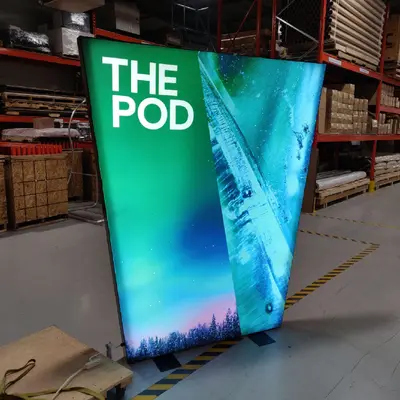
The units were built as aluminium boxes with tensioned fabric faces. A silicone bead sewn to the perimeter of the printed graphic seats into a groove in the extrusion, which tensions the fabric flat across the whole opening and needs nothing more than fingers to fit or remove. Because the bead does the work, the frame does not need a bezel overlapping the artwork, so the image reads to the edges. Faces are printed as backlit fabric, produced to a density curve for transmitted light, and they roll into a tube for courier at a fraction of the cost and risk of shipping a rigid panel. Internally, cavity depth and diffusion were set so the LED array spreads before it reaches the fabric, which is what keeps the face even from corner to corner instead of banded.