Retail
Extruded frames and backlit lightboxes for Rogers Mobility retail
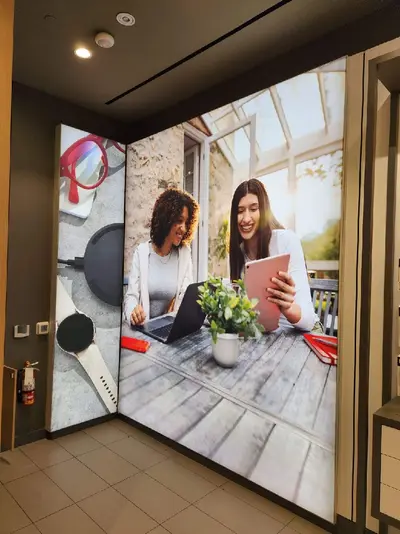
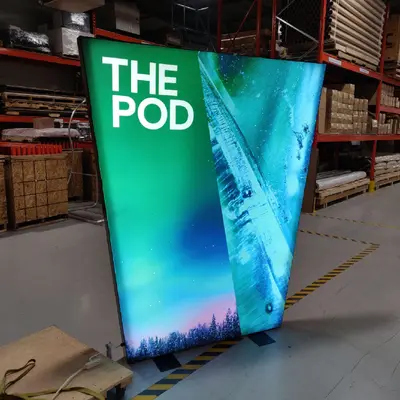
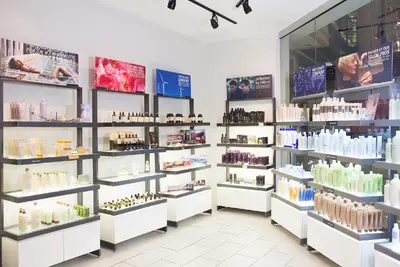
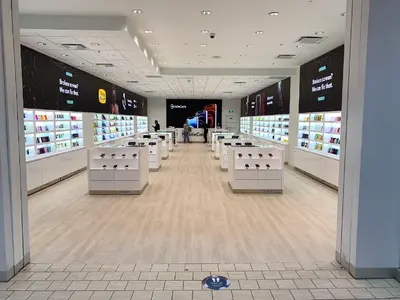
Aluminium extruded frames carrying stretch fabric graphics, plus lightboxes with backlit fabric faces, produced for Rogers Mobility. A retail programme is a repeatability problem: the same fixture has to look the same in every store, and the same brand colour has to look the same lit and unlit.
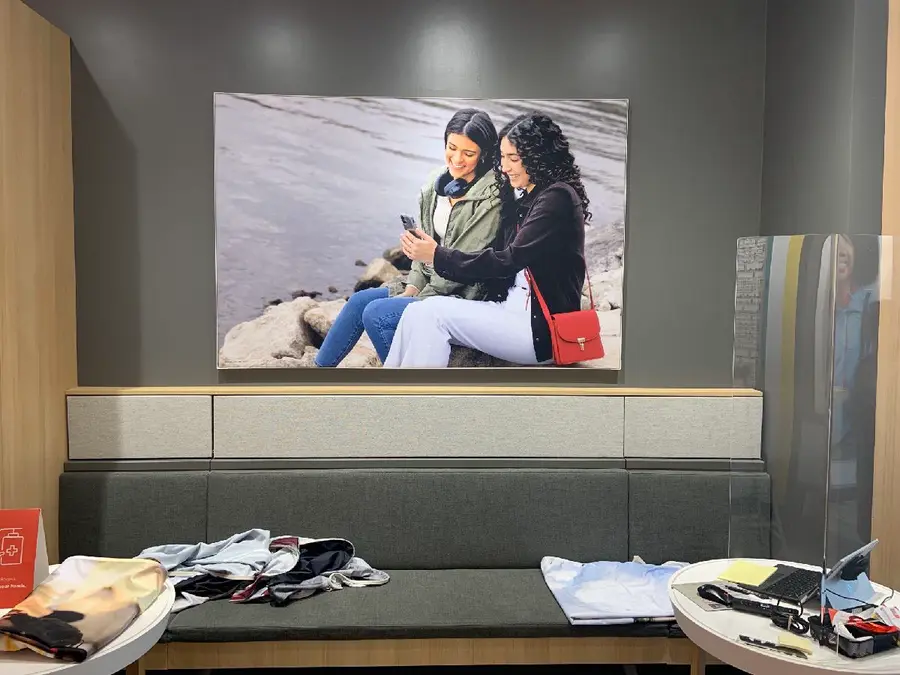
What the job demanded
Telecom retail runs on frequent campaign changes across a fleet of stores, so the interesting constraints are not about any one panel. Hardware installed today has to accept a graphic produced eighteen months from now, which means tolerances and profile specification are fixed early and not revisited. Faces are changed by store staff between trading days. And the awkward part is colour: a front-lit fabric panel and a backlit fabric panel in the same room are two different materials being read two different ways, one by reflected light and one by transmitted light. Printed from the same file with the same profile they will not match, and a brand colour that shifts between two fixtures a few metres apart is immediately obvious to anyone standing in the store.
How it was produced
Both fixture types use aluminium extrusion with a silicone edge channel. A silicone bead sewn to the perimeter of each printed skin presses into the groove, tensioning the fabric flat and letting the image run to the frame edge, and it fits and releases by hand so a changeover needs no tools. The two graphic types were handled separately in prepress. The front-lit skins were profiled for reflected viewing on an opaque fabric; the backlit faces were printed to a transmitted-light density curve on a different base material, then adjusted against the lit fixture rather than against a proof, because a backlit print judged flat on a desk is meaningless. Once both were signed off illuminated and unilluminated, the same colour build was locked for reprints across the programme.